EU Business Leaders Considered Retaliation Over Tariff 'Blackmail'
William Williams ·
Listen to this article~3 min
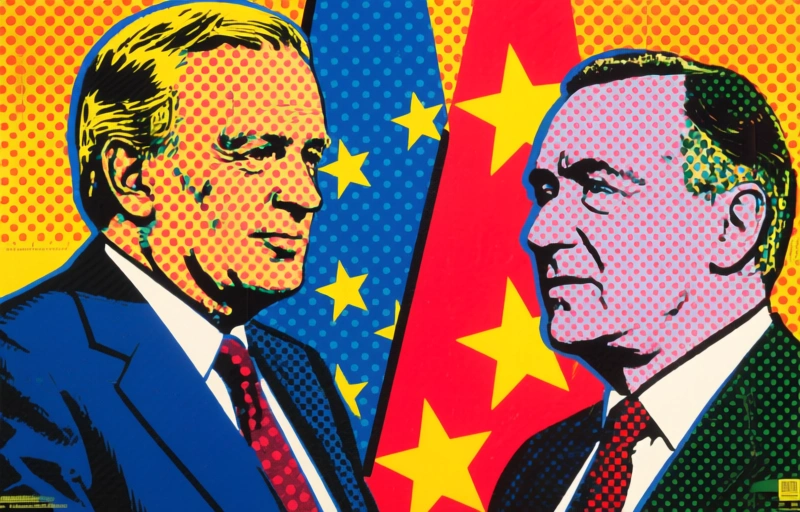
While immediate tariff threats have eased, European business leaders seriously discussed retaliatory measures, labeling recent pressures as 'blackmail.' This marks a significant shift in transatlantic trade dynamics.
The immediate heat from the latest tariff threats might be fading, but the conversation it sparked in European boardrooms is anything but cool. For a tense period, the talk wasn't just about absorbing costs or finding new suppliers. It was about hitting back. The word 'blackmail' was thrown around, and with it came serious discussions about retaliatory measures. That's a significant shift in tone, and it tells you a lot about the current state of transatlantic trade relations.
It's easy to see tariffs as abstract policy tools. But for the executives running European companies, they're a direct hit to the bottom line. Suddenly, your carefully calculated profit margins are under pressure. Your supply chains, already tested by recent global events, face another costly disruption. The initial reaction is often defensive—how do we survive this?
### The Moment 'Blackmail' Entered the Lexicon
This time, something different happened. The narrative moved beyond mere survival. When business leaders start publicly using terms like 'blackmail,' it signals a deep frustration with what's perceived as coercive tactics. It's not just an economic dispute anymore; it's framed as an issue of principle and fair play. This language reflects a feeling that the rules of engagement are being unfairly twisted, pushing corporate strategy into the realm of geopolitical response.
That's a dangerous precipice. Once retaliation is on the table as a legitimate boardroom topic, it changes the dynamic entirely. It's no longer a one-way street where Europe simply reacts to external pressures. The calculus becomes: What would a proportional response look like? Which sectors would we target? How do we protect our own interests without escalating into a full-blown trade war that hurts everyone?
### The Lasting Impact on Corporate Strategy
Even as the immediate threat recedes, its shadow remains. The fact that retaliation was seriously discussed creates a new precedent. Business leaders have been forced to game out scenarios they previously might have dismissed. This leads to several concrete shifts in corporate planning:
- **Diversification is accelerating.** Reliance on any single market, no matter how large, is now seen as a critical vulnerability.
- **Political risk assessments** have been upgraded. Trade policy volatility is now a top-tier concern for risk committees.
- **Supply chain resilience** investments are getting a further boost, moving from 'nice to have' to non-negotiable.
As one analyst put it recently, 'The genie of retaliation is out of the bottle. You can't un-think those strategies once they've been formally considered.' The focus may have shifted from immediate action to long-term preparation, but the underlying tension hasn't disappeared. It's just moved to a simmer.
So, while headlines announce that tensions are cooling, the strategic landscape for European business has been permanently altered. The next threat might not be met with just worried analysis. The playbook for response has been drafted, and it contains chapters no one wanted to write. The hope, of course, is that cooler heads and mutual interest prevail, making that playbook obsolete. But in today's world, hope isn't a strategy—contingency planning is.