EU Business Leaders Considered Retaliation Over Tariff 'Blackmail'
William Williams ·
Listen to this article~4 min
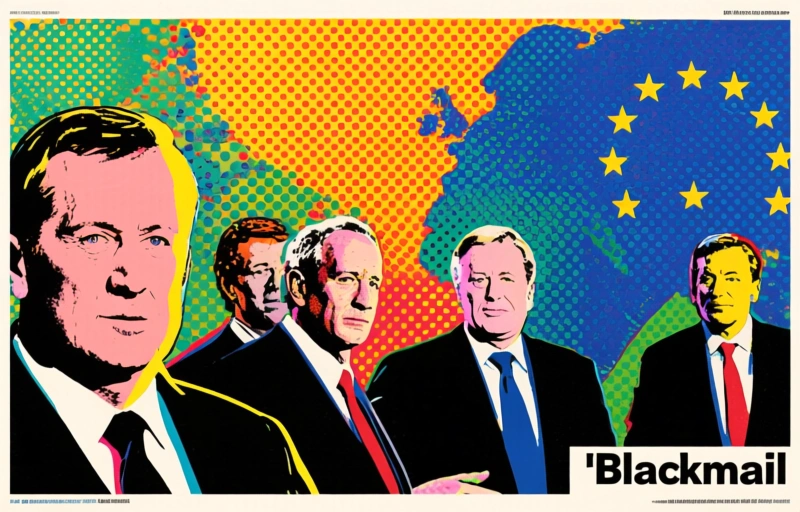
While immediate tariff threats have cooled, European business leaders were pushed to the brink, privately discussing retaliation against what many called economic 'blackmail,' signaling a permanent shift in transatlantic trade relations.
So, the immediate heat over those proposed tariffs has started to fade a bit. That's the headline, right? But here's the thing that's got everyone in European boardrooms still talking: the reaction wasn't just concern. It was outright anger. The threat had top business leaders across the continent seriously discussing one word in response: retaliation.
They weren't just worried about the economic impact, though that's a massive part of it. They felt the move crossed a line. The language being used privately, and sometimes not so privately, was strong. Words like 'blackmail' were thrown around. It wasn't just a policy dispute; it felt like a fundamental challenge to the rules-based trading system Europe has built its prosperity on.
### The Underlying Tension Remains
While the specific tariff threat may have cooled for now, the underlying tension hasn't vanished. It's like turning down the burner on a pot—the water's not boiling over, but it's still plenty hot. European executives are now operating with a new layer of risk calculus. The precedent has been set. The question hanging in the air is simple: what happens next time?
This episode has forced a hard look at dependencies and supply chains. The conversations have shifted from pure cost-efficiency to resilience and strategic autonomy. It's a different way of thinking for many companies that have thrived on seamless global integration.
### What 'Retaliation' Could Look Like
When business leaders talk retaliation, they're not necessarily suggesting a tit-for-tat tariff war. The discussions were broader and more strategic. The focus was on leveraging Europe's own economic strengths and regulatory power. Think about it:
- Accelerating the shift to alternative suppliers and markets
- Pushing for stronger EU trade defense instruments
- Mobilizing investment away from sectors seen as vulnerable to pressure
- Using the EU's formidable regulatory framework as a tool of economic statecraft
It's a more nuanced, long-game approach. The goal isn't just to hit back; it's to build a position of strength that makes future 'blackmail' attempts less likely to succeed. As one analyst put it over coffee last week, "It's about changing the game, not just winning a round."
### The Lingering Impact on Business Confidence
Perhaps the most lasting damage from this whole episode is to confidence. The threat, even if temporarily shelved, introduces a volatility that makes long-term planning incredibly difficult. How do you commit to a five-year investment in a factory or a new product line when the trading rules might be used as a political lever?
This uncertainty has a cost. It can slow down investment decisions, make financing more expensive, and force companies to hold more cash in reserve 'just in case.' That's capital not being used to grow, innovate, or hire. The chill on business sentiment might be the most significant tariff of all, even if it's one you can't see on a balance sheet.
So, while the news cycle moves on to the next crisis, the conversations in European business circles haven't really stopped. They've just gotten quieter, more strategic, and frankly, more serious. The genie is out of the bottle. The idea that trade could be weaponized in this way is now a permanent part of the risk landscape. And everyone is adjusting their maps accordingly.