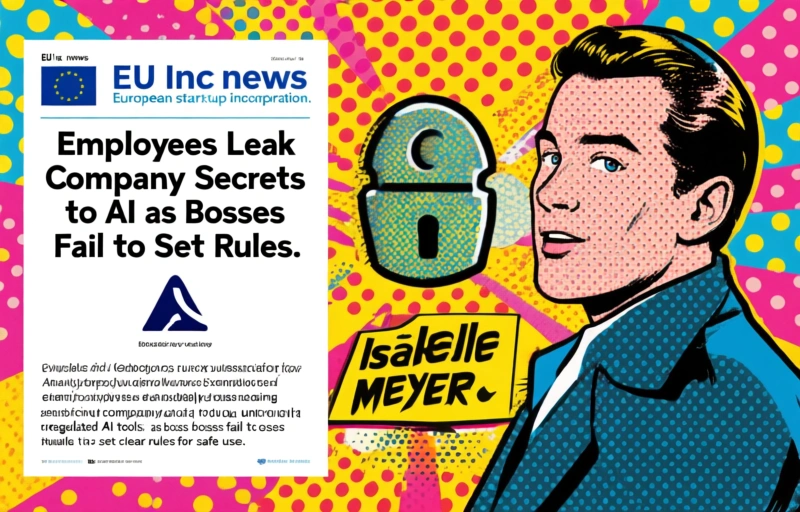
Employees Leak Company Secrets to AI as Bosses Fail to Set Rules
Jan de Vries ·
Listen to this article~4 min
Cybersecurity expert Isabelle Meyer warns employees are unknowingly exposing sensitive company data through unregulated AI tools, as bosses fail to set clear rules for safe use.
Cybersecurity expert Isabelle Meyer is raising a red flag that many business leaders would rather ignore. She says employees are accidentally leaking sensitive company data through unregulated AI tools—and the real problem isn’t the tech, it’s that bosses haven’t set clear rules.
This isn’t about malicious intent. Workers aren’t trying to steal trade secrets or hand over customer lists. They’re just using tools like ChatGPT, Bard, or other AI platforms to get their jobs done faster. But without proper guidelines, they’re copy-pasting confidential information—contracts, financial data, even proprietary code—into systems that don’t promise privacy.
### The Unseen Risk of AI in the Workplace
Here’s the thing: most employees don’t realize that when they paste a company document into a free AI chatbot, that data might be stored, analyzed, or even used to train future models. It’s not always clear what happens behind the scenes. And that’s where the danger lives.
Meyer explains that the problem isn’t new, but it’s growing fast. As AI tools become more powerful and easier to access, the line between helpful and harmful gets blurred. Companies that don’t act now could face serious consequences—like losing client trust or getting hit with legal trouble.

### Why Bosses Are Dropping the Ball
So why aren’t leaders stepping in? According to Meyer, it’s a mix of ignorance and denial. Many executives either don’t understand how AI tools work, or they assume their employees will just “know better.” That’s a dangerous assumption.
- **Lack of training:** Most companies haven’t educated staff on what’s safe to share with AI.
- **No clear policies:** Few workplaces have written rules about using external AI tools.
- **Blame game:** When something goes wrong, leaders point fingers instead of fixing the root cause.
### A Simple Fix for a Complex Problem
The good news? This isn’t rocket science. Meyer suggests a few straightforward steps that can make a huge difference:
- **Set clear guidelines:** Write down what employees can and can’t input into AI tools.
- **Train your team:** Run short workshops that show real examples of data leaks.
- **Choose secure tools:** Invest in enterprise-grade AI solutions that promise data privacy.
It’s about building a culture of awareness, not fear. When people understand the risks, they’re more likely to make smart choices.
### The Bottom Line for US Businesses
For companies in the United States, this is especially urgent. With stricter data privacy laws in some states and growing scrutiny from regulators, a single leak can cost millions. Think about it: losing a client’s personal info could trigger lawsuits, fines, and a PR nightmare.
But it’s not just about avoiding trouble. It’s about earning trust. Customers want to know their data is safe. Employees want to feel empowered, not watched. And leaders? They need to step up and set the rules before it’s too late.
Meyer puts it simply: “The technology isn’t going away. The question is whether you’ll manage it or let it manage you.”
So take a look at your own company. Are your teams using AI without guardrails? If so, now’s the time to act—before a well-meaning employee accidentally hands over the keys to the kingdom.