Duty: W/O Norman Cyril Jackson VC's Heroic Lancaster Mission
Jan de Vries ·
Listen to this article~5 min
Warrant Officer Norman Cyril Jackson's 1944 Lancaster mission over Germany showcases extraordinary bravery. He climbed onto a burning wing to fight flames and save his crew, earning the Victoria Cross.
When you think about World War II heroism, few stories match the sheer grit of Warrant Officer Norman Cyril Jackson. His Lancaster mission over Germany in 1944 wasn't just another bombing run. It was a testament to what one man can do when his crew's survival hangs in the balance.
Jackson's story isn't just about medals or official records. It's about a moment when everything went wrong, and he chose to act anyway. Let's dive into what really happened that night and why his bravery still matters today.
### The Setup: A Lancaster Over Hostile Skies
Jackson was serving as a flight engineer on a Lancaster bomber. These four-engine beasts were the workhorses of the Royal Air Force, but they weren't invincible. On that fateful mission over Germany, his aircraft took heavy fire from enemy fighters. The situation went from bad to worse fast.
The plane's fuel tanks were hit. Flames erupted along the wing. Most crews in that position would have bailed out immediately. But Jackson saw something else: his crewmates still trapped inside, depending on him to get them home.
### The Moment of Decision: Climbing Out on a Burning Wing
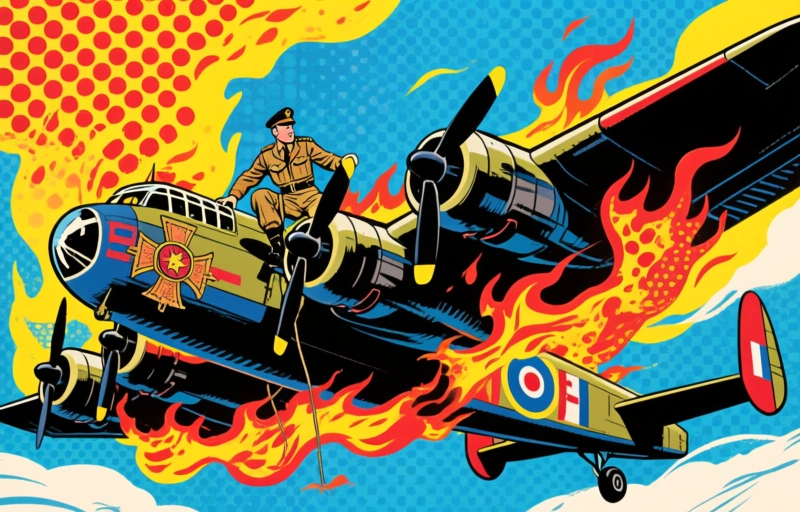
Here's where the story gets almost unbelievable. Jackson grabbed a fire extinguisher and climbed out of the cockpit window. Onto the wing. While the plane was still flying at thousands of feet. While enemy fighters were still shooting at them.
- He crawled along the wing with wind speeds over 200 miles per hour threatening to tear him off.
- He used his bare hands to fight flames that could have ignited the remaining fuel at any second.
- He stayed there for several minutes, refusing to give up even as the fire spread.
It's the kind of bravery that sounds like a movie script. But Jackson lived it. For real. In the freezing cold, at night, over enemy territory.
### The Aftermath: A Victoria Cross and a Legacy
Jackson didn't survive the mission unscathed. He was blown off the wing when the aircraft exploded. He fell thousands of feet without a parachute. Somehow, he survived that fall too, though with severe burns and injuries. German soldiers captured him, and he spent the rest of the war as a prisoner.
But his actions that night saved his crew. The Lancaster managed to stay airborne long enough for most of them to escape. For this, Jackson received the Victoria Cross, the highest military honor in the British system. His citation describes "conspicuous bravery" and "devotion to duty" in the face of almost certain death.
### Why Jackson's Story Resonates Today
We don't often talk about individual heroism in modern warfare. But Jackson's story reminds us that ordinary people can do extraordinary things when the stakes are highest. He wasn't a superhero. He was a flight engineer who refused to let his mates die.
- His actions show how teamwork and loyalty can override self-preservation.
- His story highlights the human cost of war, where every mission carries life-or-death weight.
- It challenges us to think about what we would do in a similar situation.
For professionals in the startup world, there's a lesson here too. Building something meaningful often requires stepping out of your comfort zone. Taking calculated risks. Fighting for your team when things go sideways. Jackson's example isn't just historical. It's a blueprint for courage in any field.
### The Broader Context: European Heroes in World War II
Jackson was part of a larger story. Thousands of European airmen flew similar missions, many never returning. The Lancaster bomber itself became a symbol of Allied resistance. Understanding Jackson's story means understanding the context of a war that shaped modern Europe.
His Victoria Cross is now displayed at the Royal Air Force Museum. It serves as a physical reminder of what one person can achieve when duty calls. But the real legacy is in the lives he saved and the example he set.
### Final Thoughts: Remembering the Human Element
We often reduce history to dates and statistics. Jackson's story breaks that pattern. It's personal. It's visceral. It's a reminder that behind every medal is a person who made a choice when the easy option was to give up.
If you're interested in World War II history or just need a dose of inspiration, study Jackson's mission. It's not just about the past. It's about what human beings are capable of when they refuse to quit.
And that's a lesson worth carrying with you, whether you're in a boardroom or a bomber.