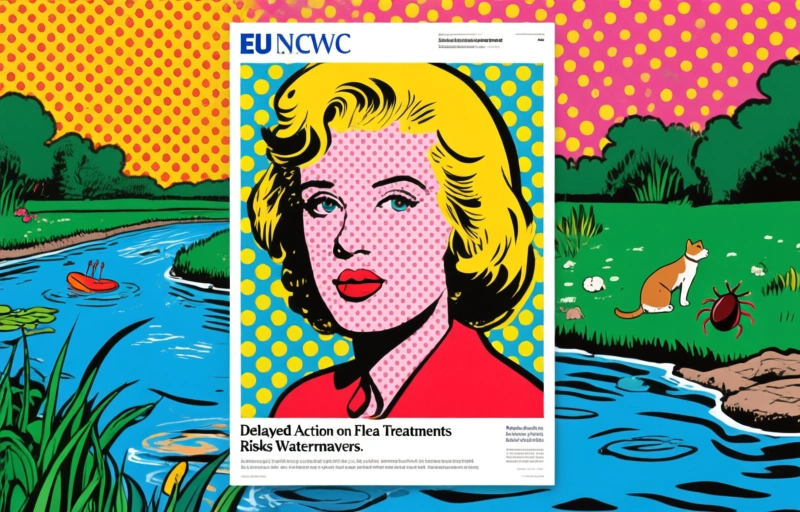
New research reveals toxic chemicals from spot-on flea and tick treatments are polluting waterways, harming aquatic life. Learn why regulators are slow to act and what you can do to protect your pet and the environment.
Have you ever wondered where those chemicals from your pet's flea treatment end up? It's a question that's gaining urgency as new research reveals a troubling connection between spot-on flea and tick medications and pollution in our rivers and streams.
### The Hidden Cost of Pest Control
When you apply a spot-on treatment to your dog or cat, the chemicals don't just stay on their fur. They wash off during baths, rain, or even when your pet swims. These compounds, often potent neurotoxins, then travel through drains and into local waterways. Studies now show that these substances are accumulating in aquatic environments, harming insects and other small organisms that form the base of the food chain.
This isn't a small problem. In some regions, levels of these chemicals have been detected at concentrations high enough to kill or impair aquatic life. The concern is growing among environmental scientists and regulators alike.
### Why the Delay in Regulation?
You might think that such clear evidence would trigger swift government action. But the reality is more complicated. Regulatory agencies often move slowly, balancing public health, industry interests, and scientific uncertainty. Here are some key reasons for the delay:
- **Insufficient data**: While early studies show harm, regulators often demand more comprehensive research before imposing restrictions.
- **Industry pushback**: Pet pharmaceutical companies have a strong incentive to protect their multi-billion dollar market. They may fund studies that downplay risks or lobby against stricter rules.
- **Complex approval processes**: In the U.S., the Environmental Protection Agency (EPA) oversees pesticide registrations, but the process is slow and resource-intensive.
- **Public awareness gap**: Most pet owners simply don't know about this issue. Without public pressure, politicians have little motivation to act.
### What Can Be Done?
The good news is that change is possible. Several European countries have already begun phasing out the most toxic ingredients, and some U.S. states are considering similar measures. But faster action requires a shift in how we approach pet parasite control.
Consider these alternatives:
- **Oral medications**: Pills that work from the inside don't wash off into the environment.
- **Topical treatments with safer ingredients**: Some newer products use compounds that break down quickly in water.
- **Non-chemical methods**: Regular grooming, vacuuming, and using flea combs can reduce reliance on pesticides.
> "The problem isn't that we need to stop protecting our pets from fleas and ticks," says Dr. Emily Hart, an environmental toxicologist. "It's that we need smarter solutions that don't sacrifice our waterways."
### A Call for Faster Action
Regulators need to prioritize this issue and allocate resources to evaluate the risks more quickly. Meanwhile, consumers can make a difference by choosing products with lower environmental impact and by asking their veterinarians about safer options.
The delay on spot-on treatments isn't just a bureaucratic hiccup. It's a slow-motion environmental crisis that affects everything from mayflies to fish to the birds that eat them. The time to act is now, before the damage becomes irreversible.
By staying informed and making conscious choices, we can protect both our pets and the planet. It's not about giving up convenience, it's about demanding better.