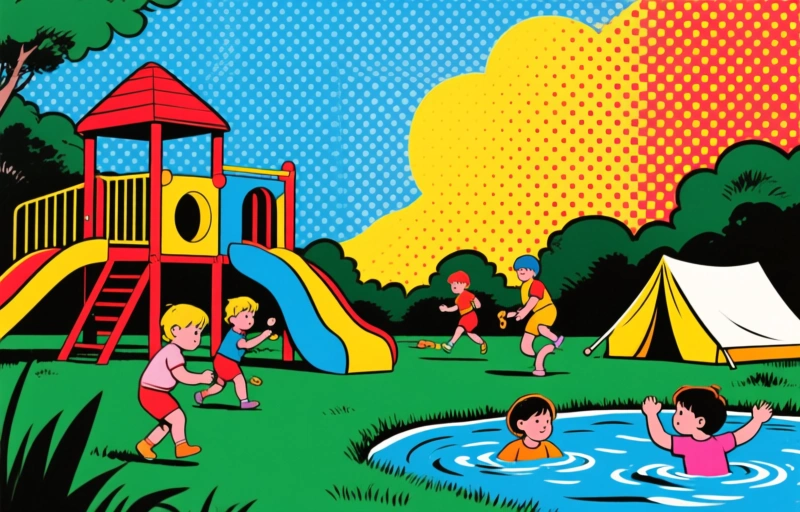
Alan Lawson examines a compelling idea: could reconnecting kids with nature through activities like wild swimming and camping be the key to improving their wellbeing and reversing the decline in outdoor play?
You've seen the headlines. Kids are spending more time indoors, glued to screens, while their connection to the outside world seems to be fading. It's a concern that's on the minds of parents, educators, and health professionals across the board. But what if some of the most timeless, simple activities held the key to reversing this trend? I'm talking about wild swimming, camping, and the raw, unfiltered joy of being in nature. Alan Lawson's exploration into this idea isn't just theoretical. It's a real look at how reconnecting with the elements might be the unexpected solution we need for young people's wellbeing. It goes beyond just 'getting some fresh air.' It's about rebuilding a fundamental relationship with the physical world. And the potential benefits? They're more profound than you might think.
### The Simple Power of Unstructured Play
Think back to your own childhood for a moment. The best memories often weren't the organized events or expensive toys. They were the muddy knees, the secret forts in the woods, the feeling of cool water on a hot day. That's the essence of outdoor play. It's not scheduled or supervised into oblivion. It's spontaneous, creative, and driven by curiosity. When kids are left to explore a creek, climb a tree, or build a campsite, they're not just having fun. They're learning risk assessment, problem-solving, and cooperation in the most direct way possible. These are skills that a tablet app can't truly replicate.

### Beyond Physical Health: The Mental Reset
Sure, we know being active is good for the body. But the impact on mental health is where nature-based activities really shine. Wild swimming, for instance, isn't just a workout. The shock of cold water, the focus required to navigate a current, the sheer immersion in an environment you can't control – it forces a mental reset. It pulls you completely into the present moment, away from digital notifications and internal anxieties. For a generation reporting higher levels of stress and anxiety, this kind of natural 'hard reboot' could be invaluable. Camping extends this effect. A night under the stars, with the crackle of a fire and the sounds of the forest, strips away the constant stimulation of modern life. It allows for real conversation, quiet reflection, and a different pace of being.
### Making It Accessible: The Real Challenge
Now, I can hear the objections. 'That sounds great, but we live in the city,' or 'I don't have time to drive hours to a national park.' And that's the real hurdle, isn't it? The idea isn't to make every family commit to week-long wilderness expeditions. It's about finding small ways to reintroduce these elements. Could it be a commitment to one 'unplugged' afternoon a week at a local park? A weekend camping trip at a site just 20 miles away? Maybe it's simply finding a safe spot for kids to get their feet wet in a stream. The goal is to make nature a regular character in the story of childhood again, not a rare special guest. It's about prioritizing it amidst the busy schedules.
As Lawson's work suggests, the decline in outdoor play isn't just a loss of a pastime. It's a shift in how an entire generation experiences the world. Reversing it might not require complex new programs or expensive technology. It might just mean rediscovering the value in what's already here: the water, the woods, the wide-open sky. The invitation is there. The question is whether we'll accept it and pass it on.
- Builds resilience and problem-solving skills
- Reduces stress and improves mental focus
- Fosters a deeper sense of environmental stewardship
- Encourages creativity and social skills away from screens