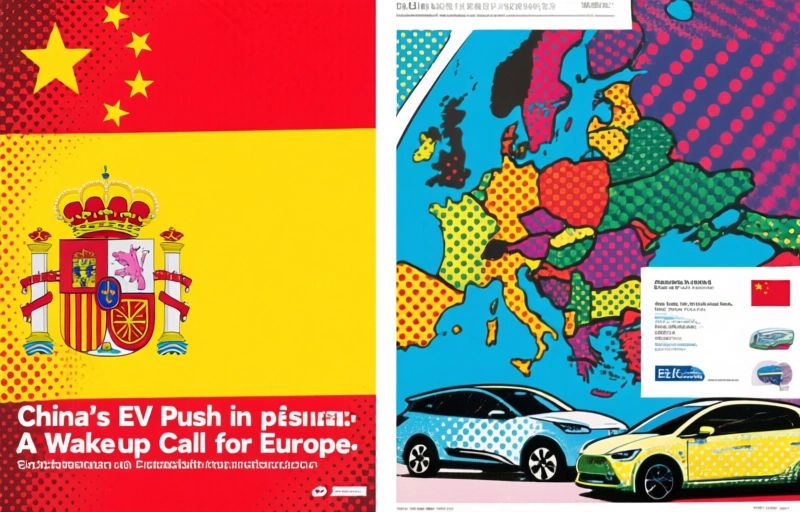
China's strategic push into Spain's electric vehicle market challenges Europe's auto industry. Learn what this means for startups, investors, and the future of EV manufacturing in the EU.
China is making serious moves in Spain's electric vehicle market, and that's got a lot of people in Europe paying close attention. This isn't just another news headline about trade or manufacturing. It's a clear signal that the global auto industry is shifting fast, and Europe needs to keep up.
### Why Spain Matters
Spain is a big deal for car manufacturing. It's one of the largest car producers in Europe, with a strong network of factories and suppliers. So when China sets its sights on Spain, it's not random. It's strategic. They're looking at a country that already has the infrastructure, the workforce, and the location to serve the entire European market.
- Spain produced over 2 million vehicles in 2023 alone.
- It's home to major plants from Volkswagen, Renault, and Stellantis.
- Its ports give quick access to North Africa and the rest of Europe.
### What China Is Doing Differently
Chinese EV makers aren't just selling cars. They're building relationships with local governments, setting up supply chains, and offering competitive pricing. They're also investing heavily in battery technology, which is the most expensive part of an EV. By controlling the battery supply, they can keep costs down in ways European makers struggle to match.
For example, a Chinese EV can cost around $25,000, while a comparable European model might run $40,000 or more. That's a big gap, and it's only going to widen as Chinese companies scale up.
### The Challenge for Europe
Europe has some serious advantages. Strong brands, engineering expertise, and a loyal customer base. But those things can only carry you so far. The real challenge is speed. China is moving fast. They're building factories, signing deals, and getting cars on the road while European regulators are still debating emissions standards and battery recycling rules.
> "The biggest risk for Europe isn't that China will out-innovate us. It's that we'll out-deliberate ourselves."
That quote from a industry analyst sums it up well. Europe has the talent and the resources. What it lacks right now is urgency.
### What This Means for Startups and Investors
If you're in the EV space or thinking about it, this is a moment to watch. The EU is likely to respond with new incentives for local production, stricter tariffs on Chinese imports, and more funding for battery research. That could open doors for smaller companies and startups that can move quickly and adapt.
- Look for grants and subsidies tied to local battery production.
- Consider partnerships with Spanish or Eastern European manufacturers.
- Keep an eye on trade policy changes that could affect pricing.
### The Bottom Line
China's EV strategy in Spain is a wake-up call, but it's not a crisis. It's a competitive push that forces everyone to get better. For European companies, the path forward is clear: innovate faster, collaborate smarter, and don't wait for perfect regulations. The market is moving, and the ones who move with it will win.
This isn't just about cars. It's about the future of manufacturing, energy, and economic independence in Europe. And that's a conversation worth having.