Can the US Force Britain into War? International Law Says No
Jan de Vries ·
Listen to this article~4 min

Can the United States legally force Britain into a conflict with Iran? We break down the international laws and UN Charter rules that protect national sovereignty and prevent allies from being dragged into war.
Let's talk about something that's been on a lot of minds lately. Can one country, even a close ally like the United States, legally drag another nation into a conflict? Specifically, could Britain be forced into a war with Iran based on American actions? It's a heavy question, but international law has some pretty clear answers.
Think of it like this. You have a friend who gets into a heated argument. Just because you're friends doesn't mean you're automatically obligated to jump into the fight, right? International law works on a similar principle of sovereignty. Each nation gets to make its own decisions about war and peace.
### The Core Legal Shield: National Sovereignty
At the heart of this issue is a simple, powerful idea. No country can be *forced* to go to war. The decision to use military force is one of the most fundamental rights of a sovereign state. Britain's parliament, and Britain's parliament alone, holds the authority to commit British troops to an armed conflict. This isn't just tradition; it's a bedrock principle of the modern international system.
So, what happens when an ally comes calling? The legal reality is that alliances like NATO come with specific, written commitments. They don't create a blank check for automatic involvement in every skirmish. The famous Article 5 collective defense clause, for instance, is triggered by an armed attack against a member. It's not invoked by one member choosing to start a fight elsewhere.

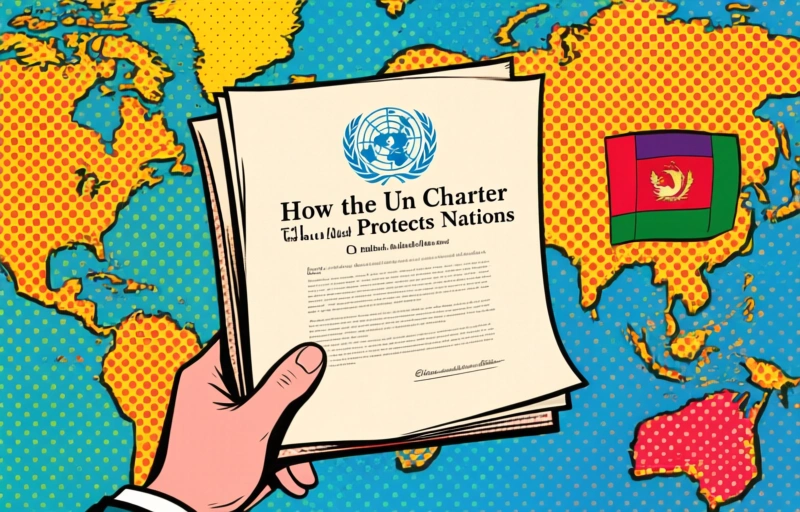
### How the UN Charter Protects Nations
The United Nations Charter acts as the world's main rulebook to prevent exactly this kind of scenario. It's designed to stop powerful nations from pulling others into their disputes. Two articles are especially important here:
- **Article 2(4)**: This prohibits the threat or use of force against the territorial integrity of any state. In plain English, you can't attack another country.
- **Article 51**: This recognizes the inherent right of self-defense if an armed attack occurs. But crucially, this right belongs to the state that was attacked.
These rules create a high bar. For Britain to legally join a US-led war with Iran, the UK government would need to independently determine that a valid case for self-defense exists under the UN Charter. It couldn't just tag along because an ally said so. As one legal expert put it, "Alliances provide a framework for cooperation, not a mechanism for conscription."
### The Practical Reality for Britain
Beyond the black-letter law, there are massive practical and political hurdles. The British government would face immense scrutiny from its own parliament, public, and media. The memory of the Iraq War and the lessons learned about intelligence and justification loom large. The process wouldn't be swift or simple.
Here's what Britain's legal path to war would realistically involve:
- A clear, evidence-based case presented to Parliament
- A vote by MPs to authorize military action
- A demonstration of how the action complies with international law
- Consideration of the long-term strategic consequences
It's a deliberative process by design. The idea is to make going to war difficult, not easy. This legal architecture exists to cool passions and force careful thought, preventing nations from being swept into conflicts by the momentum of an ally's foreign policy.
So, while political pressure and diplomatic pleas are always part of the equation, the legal power to say "no" rests firmly with Britain. International law provides the tools and the justification for a nation to stand apart, even from its closest friends, when it comes to the grave decision of war. In the end, the choice remains sovereign.