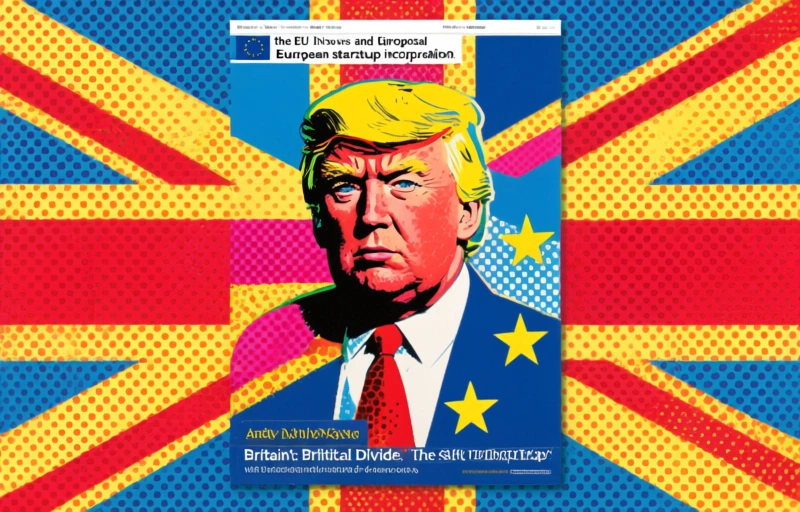
Matthew Kayne warns Britain is falling into a dangerous pattern of political division driven by distrust and reactive politics. This article explores the 'Trump Trap' and what it means for democracy.
Matthew Kayne has a warning that should make anyone paying attention to British politics sit up straight. He argues the UK is sliding into a dangerous pattern of political division, one that mirrors the deeply reactive and distrustful climate we've seen in the United States. It's not about a single leader or party. It's about a shift in how the country talks to itself, or rather, how it stops talking.
### What Is the 'Trump Trap'?
The 'Trump Trap' isn't about any one person. It's a label for a political environment where facts lose their power, trust in institutions crumbles, and every issue becomes a battlefield. Kayne sees Britain walking this same path. Instead of debating policies on their merits, the conversation turns into a shouting match. People retreat into echo chambers, and compromise becomes a dirty word.
This isn't just about big national debates. It seeps into everyday life. You see it in how neighbors talk about local issues, in the comments sections of news articles, and in the rising cynicism toward anything that sounds like authority. When distrust becomes the default, even good-faith efforts get dragged into the mud.
### Why Distrust Is the Real Engine
At the heart of this problem is a simple, scary thing: people no longer believe what they're told. Not by politicians, not by the media, not by experts. A recent poll showed that trust in the British government has dropped to historic lows, with less than 30 percent of people saying they trust politicians to tell the truth. Compare that to twenty years ago, when that number was nearly double.
- Trust in mainstream media has fallen by over 20 percentage points in the last decade.
- Political party membership has shifted toward the extremes, with moderate voices struggling to be heard.
- Social media algorithms reward outrage over nuance, making every disagreement feel like a crisis.
When trust evaporates, everything becomes reactive. A small scandal blows up into a national crisis. A policy misstep is treated like a betrayal. The political system starts lurching from one fire to the next, never getting the time to plan for the long term.
### The Cost of Reactive Politics
Reactive politics is expensive. It means leaders spend their time putting out fires instead of building a better future. For example, the UK's approach to economic policy has swung wildly in response to short-term pressures, creating uncertainty for businesses and families alike. One month it's tax cuts, the next it's austerity. This unpredictability makes it hard for anyone to plan ahead.
> "When every decision is a reaction to the last crisis, you never actually solve anything. You just kick the can down the road." — Matthew Kayne
This quote from Kayne's piece captures the heart of the problem. The system becomes a treadmill. You're running hard, but you're not going anywhere. The real damage is to the public's faith that things can get better. Once that hope is gone, cynicism takes over, and that's a tough cycle to break.
### What Can Be Done?
There's no magic fix, but there are steps that could help. First, leaders need to model a different kind of behavior. That means admitting mistakes, being transparent about trade-offs, and focusing on long-term goals rather than winning the next news cycle. Second, citizens have to be willing to engage with ideas that challenge their own. That's hard work, but it's the only way to rebuild trust.
Third, the media has a role to play. Instead of amplifying every conflict, journalists can prioritize substance over spectacle. That doesn't mean ignoring problems, but it does mean resisting the urge to frame everything as a battle between good and evil.
### The Bigger Picture
Kayne's argument is a wake-up call for anyone who cares about healthy democracy. Britain isn't doomed, but it is at a crossroads. The choices made in the next few years will determine whether the country continues down this reactive path or finds a way back to constructive dialogue. It's not about avoiding disagreement—disagreement is healthy. It's about keeping the disagreement from turning into outright hostility.
For professionals watching from the United States, this story should feel familiar. We've been living through our own version of this for years. The lesson is that political division doesn't just hurt the politicians. It hurts everyone. It makes it harder to get things done, harder to trust each other, and harder to feel good about the future. The good news is that awareness is the first step. Once you see the trap, you can start figuring out how to avoid it.