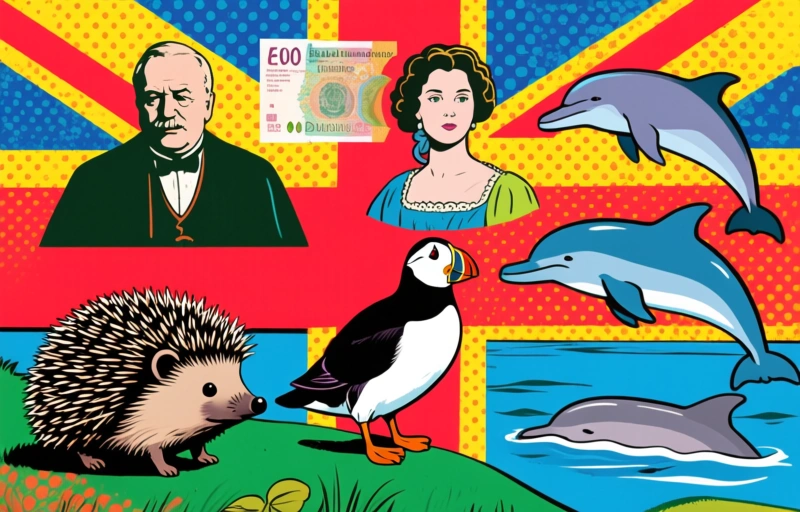
Britain is considering replacing historical figures like Churchill and Austen with wildlife on banknotes. Hedgehogs, puffins, and dolphins are shortlisted, sparking debate about national identity and conservation.
You might have heard the buzz: Britain is considering swapping out historical figures like Winston Churchill, Jane Austen, J.M.W. Turner, and Alan Turing for something a bit more... furry and feathered. Hedgehogs, puffins, and dolphins are among the wildlife shortlisted for the next generation of banknotes. It’s a bold move that’s got everyone talking—and honestly, it’s about time we had a conversation about what our money actually says about us.
Think about it. We carry these little slips of paper (or polymer, these days) everywhere, but how often do we stop to consider the stories they tell? For decades, British banknotes have celebrated human achievement—writers, scientists, artists, and leaders. But what if we shifted the spotlight to the natural world? It’s not just a design change; it’s a statement about what we value as a society.
### Why Wildlife on Currency?
The idea isn’t as random as it sounds. Other countries have done it for years. Australia features native animals like the platypus and kangaroo. Canada showcases the loon and the polar bear. So why not Britain? The shortlist includes creatures that are iconic to the British Isles—hedgehogs, puffins, dolphins, and maybe even the red squirrel. These aren’t just cute faces; they represent biodiversity and a commitment to conservation.
Let’s be real: a hedgehog might not have the same gravitas as Winston Churchill, but it’s a symbol of resilience. Hedgehogs have been around for millions of years, surviving ice ages and urbanization. Puffins, with their quirky beaks, remind us of the wild coasts of Scotland and Wales. Dolphins speak to the seas that surround the island. It’s a way to connect everyday transactions with the natural heritage we’re trying to protect.
### The Historical Figures They’d Replace
We’re talking about some heavy hitters here. Churchill, the wartime leader. Austen, the literary genius. Turner, the master of light and landscape. Turing, the father of modern computing. Each one represents a pinnacle of human achievement. But here’s the thing: our banknotes have been a gallery of human accomplishment for decades. Maybe it’s time to diversify.
- **Winston Churchill** (current on the £5 note): A symbol of leadership and defiance.
- **Jane Austen** (on the £10 note): A voice for wit and social commentary.
- **J.M.W. Turner** (on the £20 note): An artist who captured nature’s power.
- **Alan Turing** (on the £50 note): A pioneer in technology and codebreaking.
Replacing them with animals doesn’t erase their contributions. It just opens up a new chapter. Imagine pulling out a £20 note with a puffin on it—suddenly, you’re thinking about seabird colonies and climate change. That’s a conversation starter.
### What This Means for Britain’s Identity
This isn’t just about aesthetics. It’s about what we choose to celebrate. In a world grappling with environmental crises, putting wildlife on currency sends a message: we care about the planet. It’s a small but powerful shift. Plus, it’s a great way to teach kids (and adults) about native species. How many people know that puffins are actually called “sea parrots”? Or that hedgehogs can travel up to 2 miles a night looking for food?
But let’s not kid ourselves—there’s controversy. Some argue that replacing historical figures is disrespectful. Others say it’s a gimmick. I get it. Change is hard. But consider this: banknotes are updated every 10 to 20 years anyway. The Bank of England has already modernized with polymer notes and security features. Adding wildlife is just the next step.
### The Bottom Line
So, could hedgehogs, puffins, and dolphins replace Churchill, Austen, Turner, and Turing? It’s possible. The shortlist is just a proposal, but it’s got people talking. And that’s the point. Whether you’re for or against, this conversation forces us to think about identity, heritage, and the future.
One thing’s for sure: a hedgehog on a banknote would be way cuter than a politician. And in a world that feels increasingly divided, maybe a little cuteness is exactly what we need.