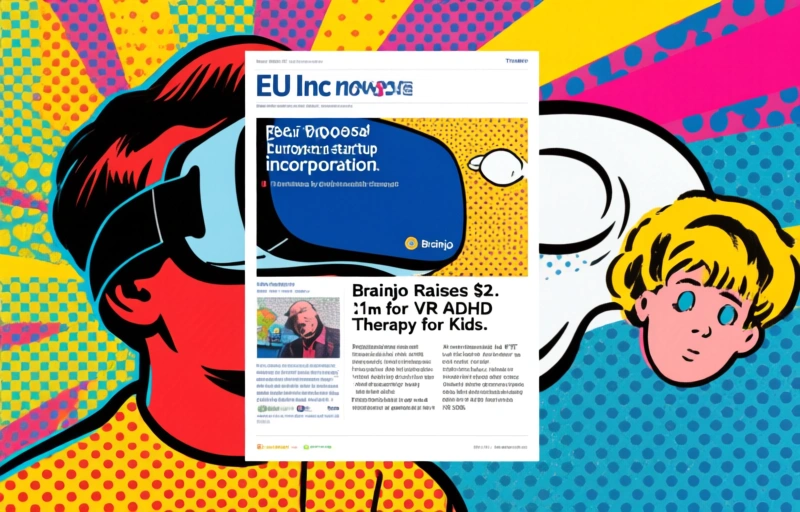
Brainjo, a Regensburg-based digital health startup, raised $2.1M to fund VR-based ADHD therapy for kids. The seed round led by HTGF will support clinical studies and regulatory approval by 2028.
### Brainjo's VR Therapy: A New Frontier in ADHD Treatment
A Regensburg-based digital health startup called brainjo just closed a Seed funding round worth $2.1 million. The money will go toward advancing clinical studies and regulatory approval for their first VR-based digital health application, or DiGA, designed specifically for children with ADHD.
This isn't just another app. Brainjo's approach uses virtual reality to complement traditional psychotherapy, not replace it. The goal? Fill critical gaps in the mental health system that leave many kids without adequate support.
### Who's Backing This Vision?
The round was led by High-Tech Grunderfonds (HTGF), a major European seed investor. Other participants include strategic partners like MEDICE – The Health Family, plus business angels Andreas Weinhut and better ventures from Munich.
Markus Wensauer, co-founder and CEO of brainjo, put it this way: "With a strong network of business angels, MEDICE as a strategic partner, and HTGF as a leading seed investor, we are ideally positioned to bring our solutions into healthcare and establish multimodal therapy offerings for patients."
### How It Works: Gaming Meets Therapy
Brainjo's ADHD VR therapy uses a playful, immersive environment to help kids practice psychotherapeutic techniques. Think transferring real-life homework tasks into VR so everyday challenges become manageable. The visual style draws from popular games like Fortnite and Minecraft, making it engaging for young users.
- Kids can practice coping skills in a safe, virtual space
- Therapists can prescribe the DiGA, which is reimbursed by health insurance
- The therapy is accessible from home, removing barriers to care
### The Science Behind the Immersion
Dr. Jorg Traub, Principal at HTGF, explained why VR stands out: "What differentiates brainjo from purely software-based solutions is the depth of immersion enabled by Virtual Reality, a clinically relevant approach that we will substantiate with study data and use to improve adherence."
This isn't about flashy tech for its own sake. The immersion factor makes therapy more engaging, which can boost adherence and outcomes. That's a big deal for kids who struggle with traditional talk therapy.
### Timeline and Next Steps
Brainjo plans to use this funding to finance clinical studies and push for regulatory approval. Market approval is targeted for 2028. The company was founded in 2022 and has an interdisciplinary team of 10 employees with expertise in technology, psychology, and healthcare.
Earlier in 2024, brainjo closed a pre-Seed round of $1.1 million for VR ADHD therapy development, plus an additional $680k from European and federal sources. The new round brings their total funding to over $3.8 million.
### What This Means for Mental Health Care
Digital therapies in psychotherapy are still in early stages, but the potential is enormous. Brainjo's approach could offer a scalable, accessible option for families struggling to find effective ADHD treatment. By combining VR with evidence-based methods, they're aiming to make therapy something kids actually look forward to.
For professionals in the startup and healthcare space, this is a development worth watching. It shows how digital health can bridge gaps in traditional care, especially for underserved populations like children with ADHD.