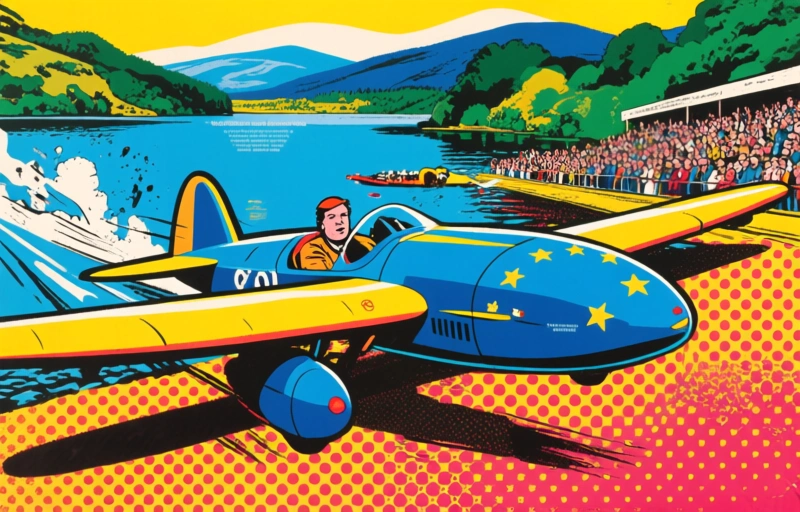
Bluebird K7 returns to Coniston Water 59 years after Donald Campbell's fatal crash, with restored trials attracting thousands of spectators. A tribute to speed and resilience.
It's been nearly six decades since Donald Campbell's tragic crash on Coniston Water, but his legacy is roaring back to life. The restored Bluebird K7 is making its return, and thousands of spectators are gathering to witness this piece of history. This isn't just a boat ride—it's a tribute to a man who pushed the limits of speed, and a story of resilience that still captivates us today.
For those who don't know, Donald Campbell was a British speed record breaker who died on January 4, 1967, while attempting to set a new water speed record on Coniston Water in England's Lake District. His jet-powered hydroplane, Bluebird K7, crashed at over 300 miles per hour, killing him instantly. The wreckage lay at the bottom of the lake for decades until it was recovered in 2001. Now, after years of painstaking restoration, Bluebird is back on the water, and it's drawing crowds like never before.
### The Restoration Journey
Restoring a 60-year-old jet hydroplane isn't easy. It took a dedicated team of engineers and volunteers over 20 years to bring Bluebird back to its former glory. They had to rebuild the hull, repair the engine, and even recreate parts that no longer existed. The result? A fully functional craft that can reach speeds of up to 200 miles per hour—though it's being tested at lower speeds for safety. The restoration cost over $1.5 million, funded largely by donations and public interest.

### What the Return Means
This event is more than just a spectacle. It's a chance to remember Campbell's achievements and the risks he took. Bluebird's return also highlights the importance of preserving engineering history. For the thousands of spectators lining the shores of Coniston Water, it's a moment of connection to the past. Some are old enough to remember the original crash, while others are learning about it for the first time. Either way, it's a powerful reminder of human ambition.
### The Spectacle Today
Here's what you can expect if you're planning to see Bluebird in action:
- **Test runs**: The restored hydroplane is undergoing trials on Coniston Water, with speeds reaching up to 150 miles per hour.
- **Crowds**: Thousands of people are showing up, including enthusiasts, historians, and families looking for a unique day out.
- **Safety measures**: Unlike Campbell's fatal run, modern protocols ensure the craft is tested cautiously, with no attempt to break records yet.
The team behind Bluebird plans to eventually push for new speed records, but for now, they're focused on honoring Campbell's memory. It's a slow, deliberate process that respects the past while looking to the future.
### Why This Matters to You
Even if you're not a speed fanatic, Bluebird's story is about perseverance. It shows how a community can come together to preserve something meaningful. The restoration team faced countless setbacks—funding shortfalls, technical challenges, even legal disputes—but they never gave up. That's a lesson we can all take to heart. Whether you're an entrepreneur, a hobbyist, or just someone who loves a good comeback story, Bluebird's return is a testament to what dedication can achieve.
### Looking Ahead
Bluebird's return is just the beginning. The team plans to display the craft at museums and events across the UK, and eventually the US. They're also working on educational programs to teach younger generations about engineering and history. For now, though, the focus is on Coniston Water, where Campbell made his final run. If you're in the area, it's worth a visit. Just bring a jacket—the Lake District weather can be unpredictable, even in summer.
In the end, Bluebird's story is one of second chances. It's not about the crash, but about the recovery. And that's something worth celebrating.