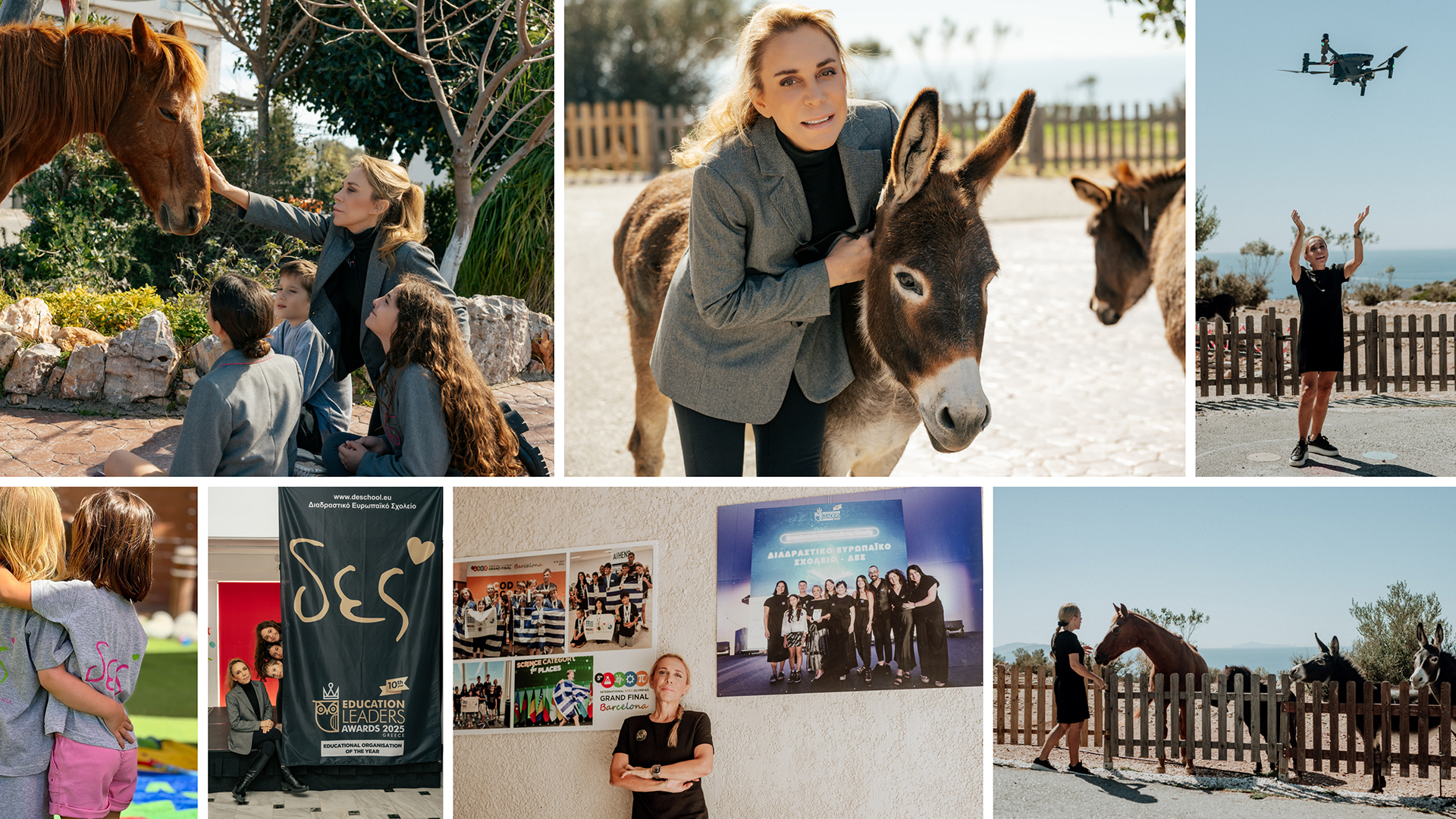
DES Interactive European School in Varkiza pairs IB programmes with Gardner's Multiple Intelligences theory. Here's how its award-winning bilingual model works.
What if a school treated every subject as a primary subject — not just math and languages, but music, art, and sport too? That's the question at the heart of DES Interactive European School, a bilingual English-Greek institution in Varkiza, on the Athenian Riviera. It recently earned recognition as the Best Bilingual IB School 2026 – Attica at the Hellenic Business Awards, and its approach is worth a closer look.
### A School Built Around Two Big Ideas
DES is the first bilingual school in Greece to pair the International Baccalaureate (IB) programmes with Howard Gardner's Theory of Multiple Intelligences. If you're not familiar with the theory, here's the short version: it argues that people don't have one general intelligence, but several autonomous intelligences that interact and help them solve problems.
That combination matters. The IB framework brings rigor and inquiry-led, student-centered learning. Gardner's model brings a belief that every child is distinct. Put them together and you get a classroom where "everyone loves to learn" isn't just a slogan on a wall.
As founder and CEO Dr. Billie Konstantara puts it:
> "At DES, innovation begins with a simple question: does this improve the way a child learns, belongs, or understands the world?"
That question guides decisions across the whole school, from curriculum design to how teachers observe and respond to individual students.
### Four Campuses, One Community
Today, DES spans four separate complexes in the southern suburbs. Across its nursery, kindergarten, primary, and middle school offerings, it serves roughly 450 students with about 150 staff. The first location opened back in 2004, and the mission hasn't changed: inspire young minds through a curriculum built around them and their growth.
Currently, DES is authorized to offer the IB Primary Years Programme (PYP) and Middle Years Programme (MYP), with the Diploma Programme to follow.
### Why the Campuses Are Part of the Curriculum
At DES, the campuses aren't just places where teaching happens. They're an invaluable part of the curriculum itself. Kids learn across classrooms, gardens, and outdoor spaces, with animal interactions and other hands-on experiences that connect knowledge to the natural world. The school also weaves technology, robotics, creativity, and social responsibility into its learning ecology — a nod to how diverse students' future careers will be.
### Values That Go Beyond Test Scores
Teaching at DES follows five central values:
- Intellectual curiosity
- Inclusion
- Responsibility
- International-mindedness
- Genuine care for the individual child
These point to a school that cares about more than results. "Our goal is not merely to prepare students for examinations," Billie explains. "It is to develop knowledgeable, ethical, and emotionally secure young people who can think independently, collaborate across cultures, and contribute meaningfully to society."
### Small Community, Close Attention
Because DES functions as an international microschool, students benefit from a tight-knit learning community. Teachers really know their students and can respond quickly to their needs. Staff set high but achievable expectations, then pair them with close observation, strong relationships, and carefully differentiated teaching — so every child is seen, understood, and challenged appropriately.
The school has also nurtured a genuinely international community spanning almost 30 nationalities. Strong connections develop across subjects, age groups, and cultures. For families weighing bilingual and IB options, that mix of academic rigor and personal attention is exactly what makes DES stand out.