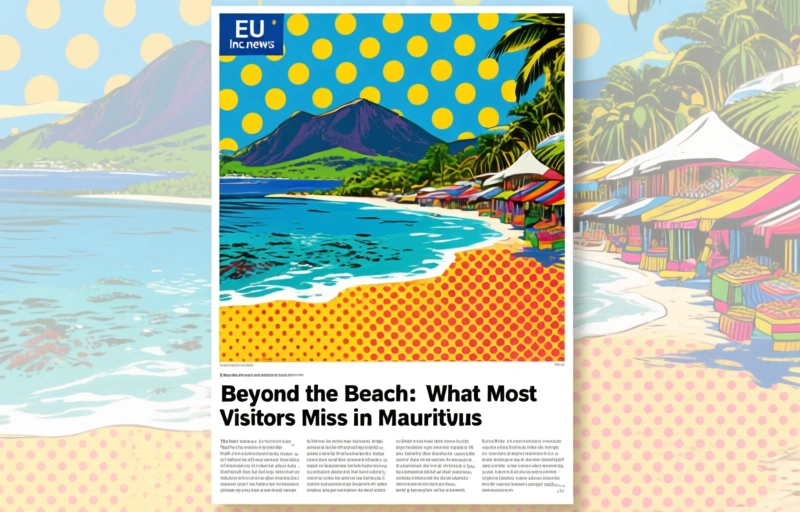
Discover the Mauritius most tourists miss. Beyond famous beaches lies a world of vibrant markets, lush mountain trails, rich cultural fusion, and breathtaking underwater life waiting to be explored.
You've seen the pictures. Turquoise water, white sand, luxury resorts. That's the Mauritius everyone knows. But here's the thing—the real magic happens when you look past the postcard.
I've spent years exploring this island, and I keep finding layers most tourists never see. It's a place where cultures collide in the most beautiful way, where mountains hold secrets, and where the underwater world is just as vibrant as the markets above. Let's dive in.
### The Markets Where Mauritius Comes Alive
Forget the hotel gift shop. If you want to feel the island's pulse, you need to visit a local market. Port Louis's Central Market is a sensory overload in the best possible way. The air is thick with the smell of spices—vanilla, saffron, chili. Vendors call out in Creole, French, and Hindi. You'll see heaps of tropical fruit you've never even heard of.
It's not just about shopping. It's about connection. Chat with a spice seller. Ask about their family. That's where you learn that Mauritian warmth isn't just from the sun. A quick tip? Bargain with a smile. It's expected, and it's part of the fun.
### Hiking Trails With Million-Dollar Views
Most visitors never leave sea level, and that's a shame. The interior is a world of emerald green peaks and volcanic craters. Le Morne Brabant, a UNESCO World Heritage site, is a challenging hike. We're talking about a 1,800-foot climb. But the view from the top? It'll stop you in your tracks.
You can see the entire lagoon, the reef, and on a clear day, the outline of the island. It's quiet up there. The only sound is the wind. It gives you a perspective you simply can't get from a sun lounger.
### A Cultural Tapestry You Can Taste
The food tells the story of the people. You have the subtle French techniques, the bold Indian curries, Chinese stir-fries, and African stews—all on one plate. A must-try is a 'dholl puri' from a street vendor. It's a flatbread stuffed with yellow split peas, served with bean curry and chutney. It costs about $1, and it's pure happiness.
As one local chef told me, "Our cuisine is our history. Every bite has a story." You'll find that story in family-run restaurants far from the tourist strips.
### The Secret World Beneath the Waves
The beaches are stunning, but the real spectacle is offshore. The coral reefs here are some of the healthiest in the Indian Ocean. Snorkeling or diving here isn't just looking at fish. It's like floating through a living kaleidoscope.
- You might spot a hawksbill turtle gliding past.
- Schools of neon-blue fish dart through the coral.
- If you're lucky, you could see dolphins playing in the deep blue.
It's a gentle reminder that Mauritius protects its natural treasures. This isn't a passive experience. You're a guest in their world.
So, what's the best time to go? Honestly, there isn't a bad time. The 'winter' months (May to October) are cooler and drier, with average temps around 75°F—perfect for hiking. The 'summer' (November to April) is warmer and more humid, around 85°F, ideal for those who love the heat and want the water to be bath-warm.
The real secret is to go with curiosity. Talk to people. Wander down a side street. Order the dish you can't pronounce. That's when Mauritius stops being a destination and starts feeling like a discovery. The paradise part? That's just the welcome mat.