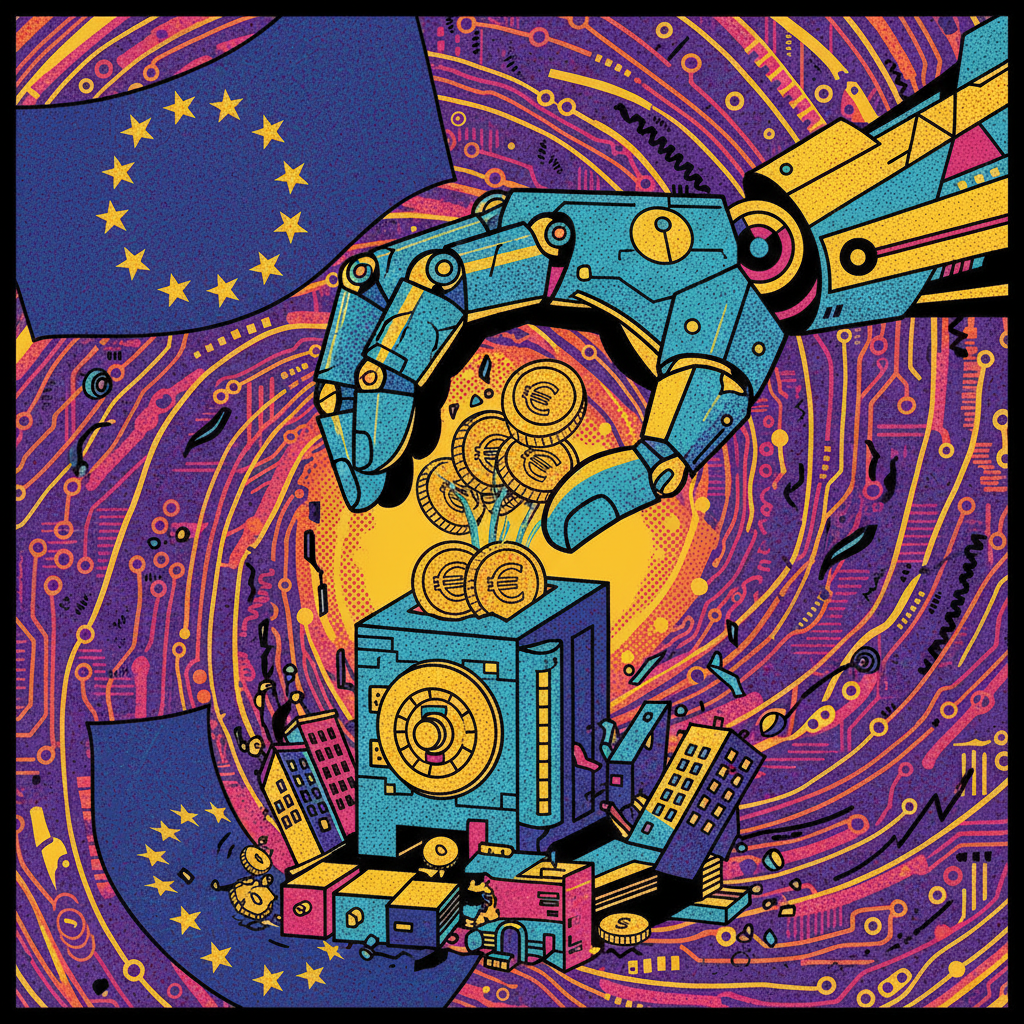
AI's hidden flaw isn't about job loss—it's about wealth concentration that weakens consumer demand and threatens economic growth. Here's how to fix it.
AI is reshaping our world at breakneck speed. But while everyone's talking about job displacement or killer robots, there's a quieter, more insidious problem that could undermine the very foundation of our economy. It's not about what AI can do; it's about who gets the rewards.
### The Real AI Problem Isn't What You Think
When we talk about artificial intelligence, the conversation usually centers on automation, efficiency, or even existential risk. But here's the thing: AI is a tool, and like any tool, it's owned by someone. And that ownership is becoming incredibly concentrated. The companies that control the most powerful AI systems are also the ones reaping the vast majority of the financial gains.
Think about it. A handful of tech giants and well-funded startups are building models that can write code, create art, and even diagnose diseases. The profits from these breakthroughs flow upward, into the hands of shareholders and executives. Meanwhile, the broader workforce sees their wages stagnate or their roles disappear.
This isn't just a fairness issue. It's a fundamental economic problem.
### Why Concentrated Wealth Hurts Everyone
Here's where the flaw gets serious. A healthy market economy depends on widespread demand. People need money to buy things. When wealth concentrates at the top, the middle class—the engine of consumer spending—shrinks. The rich can only buy so many yachts or vacation homes. But the average person? They're putting off buying a car, skipping a vacation, or cutting back on dining out.
- **Lower consumer spending** means less revenue for businesses.
- **Less revenue** leads to layoffs and lower investment.
- **Lower investment** slows innovation and productivity growth.
It's a vicious cycle. And AI is accelerating it.
### The Productivity Paradox
Economists love to talk about productivity gains. AI promises to make us more efficient, producing more with less. That sounds great on paper. But here's the catch: who benefits from that efficiency? If the gains go to a tiny fraction of people, the overall economy doesn't grow the way it should.
Imagine a factory that uses AI to double its output with half the workers. The owners get richer. The laid-off workers lose their income. They can't buy the products the factory makes. So the factory has to cut prices or reduce production, which hurts the owners too. It's a lose-lose in the long run.
> "The real danger of AI isn't the machines taking over. It's the machines making a few people incredibly wealthy while everyone else is left behind."
This quote sums up the challenge perfectly. We're not talking about science fiction. We're talking about economics 101.
### What This Means for Startups and Investors
If you're in the startup world, this should be a wake-up call. The current model of "move fast and break things" can lead to massive wealth concentration. But that model has a shelf life. When demand collapses, even the most innovative companies struggle.
For European startups, the EU Inc proposal offers an alternative. It's a framework that encourages broader ownership, employee equity, and profit-sharing. The idea is to spread the gains of AI more evenly, keeping the economy balanced.
- **Employee stock options** give workers a stake in success.
- **Profit-sharing** aligns incentives across the company.
- **Regulatory guardrails** prevent monopolistic control.
These aren't just feel-good policies. They're practical solutions to a looming economic crisis.
### The Bottom Line
AI's greatest flaw isn't technical. It's structural. The way we distribute the wealth it creates will determine whether it's a blessing or a curse. If we let it concentrate at the top, we'll choke off the demand that drives growth. But if we're smart about it—if we build systems that share the rewards—AI could lift everyone up.
It's not too late to get this right. But we need to start thinking beyond the next funding round or quarterly earnings. We need to think about the kind of economy we want to live in.
And that starts with asking the right questions. Who benefits from AI? And how do we make sure it's not just the few?